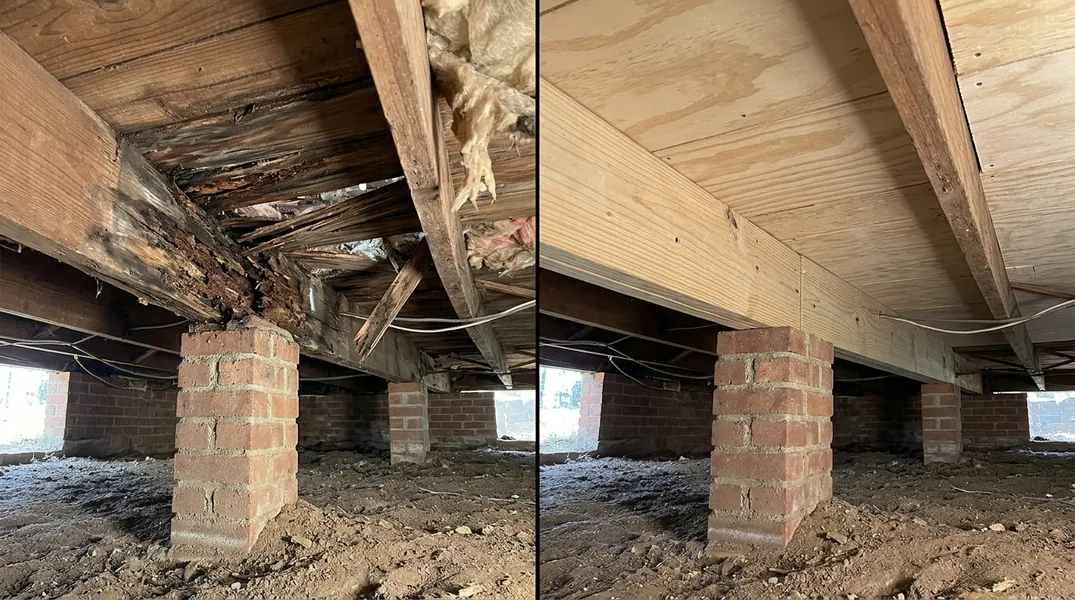
Why Is My Floor Sagging? Understanding the Killeen Connection
If you own an older home in Killeen, you've probably noticed it: that slight dip in the hardwood floor, the way your furniture slides toward one wall, or the creaky sensation underfoot when you walk across certain rooms. Sagging floors aren't just a cosmetic issue or something to ignore. They're a structural warning sign that something beneath your home needs attention, and understanding the root cause is the first step toward fixing it properly.
The reality is that Killeen homeowners face a perfect storm of conditions that make sagging floors common in older properties. The region's expansive clay soil, combined with the pier-and-beam foundation design used in many homes built before the 1980s, creates an environment where floor settlement and deterioration happen naturally over decades. Add moisture infiltration, wood rot, or termite damage to the mix, and what started as a minor sag can become a serious structural problem that affects your home's safety and value.
Clay Soil and Pier-and-Beam Foundations: A Risky Combination
Central Texas is known for its heavy, expansive clay soil. This soil expands when it absorbs moisture and contracts when it dries out. For homes built on pier-and-beam foundations (also called post-and-beam or crawl space foundations), this constant movement creates stress on the support system. The piers, which are the concrete or brick columns that hold up your home, can settle unevenly as the clay soil beneath them shifts. Over time, this uneven settling causes the beams and floor joists to lose their level, resulting in the sagging you see in your living room or bedroom.
Pier-and-beam foundations were popular in older Killeen homes because they provided good ventilation in warm climates and allowed for easier repairs underneath. However, they're more vulnerable to soil movement than modern slab-on-grade foundations. When one pier settles more than its neighbors, it creates a domino effect. The beam it supports tilts slightly, and the floor joists attached to that beam begin to sag. This isn't a quick process, it happens gradually over years or even decades, which is why you might not notice it until the sag becomes significant enough to affect how doors close or how you feel when walking across the floor.
Wood Rot, Termites, and Moisture: The Hidden Culprits Behind Floor Sag
While soil settlement is a major cause of sagging floors, it's rarely the only factor at work. In older homes, moisture is the enemy of structural integrity. Water from rain, plumbing leaks, or poor drainage can seep into the crawl space beneath your home. This moisture creates the perfect environment for Wood Rot & Dry Rot Repair, which weakens the wood beams and floor joists that support your floor. When these structural members lose their strength, they can't hold up the weight of your home and its contents, causing the floor to sag or even bounce.
Termite Damage Repair is another critical issue that many homeowners overlook until it's too late. Subterranean termites, common in the Killeen area, tunnel through wood and hollow it out from the inside. A beam or joist that looks solid on the outside might be 50% eaten away on the inside, unable to support its original load. If you notice sagging floors combined with mud tubes in your crawl space, buckling wood, or a hollow sound when you tap on beams, termite damage is likely involved.
The solution requires addressing both the structural damage and the moisture or pest problem. Simply sistering new joists (adding support beams alongside damaged ones) won't solve the problem if the underlying cause isn't fixed. That's why professional assessment is so important. A carpenter can identify whether your sag is caused primarily by settlement, rot, termites, or a combination of all three, then recommend the right repair strategy.
Sistering Floor Joists: A Proven Repair Method
One of the most effective and common solutions for sagging floors is sistering floor joists. This technique involves installing new, strong lumber alongside existing damaged or weakened joists. The new joist is bolted or fastened securely to the old one, essentially doubling the support capacity of that section of floor. When done correctly, sistering can restore a sagging floor to level or nearly level, and it's often less disruptive than replacing the entire joist.
The process begins with assessment. A carpenter needs to determine how much of the joist is compromised, whether the damage is from rot, termites, or simply age-related weakening. If the damage is localized to one section, sistering that section might be enough. If the damage spans the entire length of the joist, a full replacement might be necessary. The new lumber must be the same dimension as the original joist (typically 2x8, 2x10, or 2x12), and it must extend far enough to properly support the load. The fastening method is critical, too. Proper bolting every 16 inches or so ensures the two joists act as one unit.
Floor Joist & Subfloor Repair of this type requires precision and experience. If the fasteners are too few or too far apart, the joist won't properly share the load. If the new joist isn't perfectly aligned with the existing one, you might not achieve the level floor you're hoping for. This is not a DIY project for most homeowners. The crawl space is often tight and uncomfortable to work in, and mistakes can compromise the safety of your home.
Beam Replacement and Foundation Repair: When Sistering Isn't Enough
In some cases, the damage goes beyond individual floor joists. If the main support beam (the central beam that runs the length of your home) is severely rotted, cracked, or inadequately sized for the load it's carrying, sistering alone won't fix the problem. Beam Replacement & Load-Bearing Wall Removal may be necessary. This is a more complex and costly repair, but it's sometimes the only way to properly restore a sagging floor and prevent future problems.
Beam replacement involves temporarily supporting the load on the home (using hydraulic jacks and temporary posts), removing the damaged beam, and installing a new one that meets current building codes. This is definitely a job for licensed professionals. The temporary support system must be engineered correctly to prevent collapse, and the new beam must be properly sized and installed to carry the load safely for decades to come. If foundation piers have settled unevenly, they might also need to be adjusted or releveled as part of the overall repair.
The good news is that if you catch the problem early, you often won't need such extensive repairs. Regular inspections of your crawl space, prompt attention to water leaks, and pest prevention can help you avoid the worst-case scenarios. However, if your home is already showing signs of significant sag, don't delay. The longer you wait, the more damage occurs, and the more expensive the repair becomes.
Getting Professional Help: Sagging Floor Repair Near Me in Killeen
If you're dealing with a sagging floor in your Killeen home, the best first step is to have a professional carpenter evaluate the situation. Killeen Carpentry specializes in diagnosing and repairing sagging floors caused by all of these issues. We'll crawl under your home, inspect the beams and joists, check for rot and termite damage, and assess the condition of your piers and foundation. Then we'll explain exactly what's causing the sag and what repair options are available to you.
The cost of repair varies widely depending on the severity of the damage and the scope of work required. A few sistered joists might run several hundred dollars, while a full beam replacement could be several thousand. That's why getting an accurate free estimate is so important. You'll know exactly what you're paying for and why. Killeen Carpentry can also discuss pricing options and help you understand the long-term value of the repair.
Don't let a sagging floor become a bigger problem. Call Killeen Carpentry today at (254) 406-1645 or visit our website to schedule your inspection. We serve homeowners throughout Killeen and the surrounding area, and we're ready to help you restore your home's structural integrity and safety.
Looking for a professional carpentry contractor in Killeen? Killeen Carpentry responds fast for all your carpentry needs.
Get a Free QuoteOur services: Wood Rot & Dry Rot Repair · Termite Damage Repair · Floor Joist & Subfloor Repair