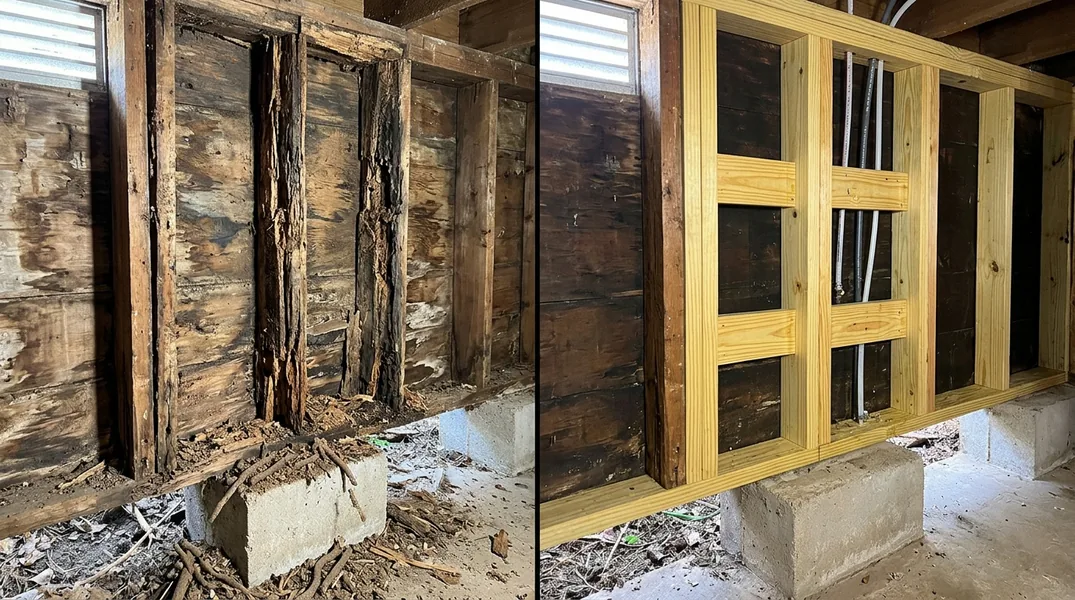
Dry Rot vs Termite Damage: The Key Differences
When you discover wood damage in your Killeen home, the first question is usually: what caused it? Dry rot and termite damage are two of the most common culprits, but they are fundamentally different problems that require different solutions. Understanding the distinction between dry rot vs termite damage is critical because the repair approach, timeline, and prevention methods vary significantly.
Dry rot is a fungal decay that thrives in moist, poorly ventilated environments. It breaks down the cellulose in wood, turning solid timber into a crumbly, weakened material. Termite damage, on the other hand, is caused by living insects that tunnel through and consume wood as they build their colonies. While both can compromise your home's structural integrity, the way they progress, spread, and respond to treatment is entirely different. Misidentifying the problem could lead to wasted money on the wrong repair approach and leave your home vulnerable to further damage.
What Does Wood Rot Look Like: Visual Signs of Dry Rot
Dry rot has a distinctive appearance that becomes easier to spot once you know what to look for. The affected wood typically develops a dark brown or black discoloration, and the surface becomes soft and crumbly to the touch. As the fungus progresses, the wood shrinks and develops deep cracks running across the grain. You may also notice a musty, earthy odor coming from affected areas, which is a telltale sign of fungal activity. In advanced cases, the wood can literally crumble into powder when you press on it.
One of the most telling characteristics of dry rot is that it can spread through wood and even across masonry if conditions remain damp. You might notice white or gray fungal strands (called mycelium) spreading across the wood surface or nearby materials. The damage often appears in areas with poor ventilation, such as under decks, in crawl spaces, around foundation walls, or in bathrooms and kitchens where moisture accumulates. If you suspect dry rot in your Killeen home, Wood Rot & Dry Rot Repair should be addressed promptly to prevent structural failure.
Signs of Termite Damage in Wood: What to Watch For
Termite damage has its own distinct visual signature that differs markedly from dry rot. Termites work from the inside of the wood outward, creating hollow galleries and tunnels as they consume the material. This means the exterior surface of infested wood often appears intact or only slightly discolored, while the interior is severely compromised. When you tap on termite-damaged wood, it sounds hollow, and if you probe it with a knife or screwdriver, you may find the interior is largely empty. The wood fibers run along the direction of the termite tunnels rather than breaking down uniformly like dry rot.
Another key indicator of termite activity is the presence of mud tubes. Subterranean termites, which are common in Texas, build thin mud-like tubes from the soil up to the wood they feed on. These tubes protect the termites from exposure to air and light. You may also notice small piles of fecal pellets (called frass) that look like fine sawdust near infested areas, or you might see the termites themselves, particularly during swarming season. Unlike dry rot, which requires moisture to spread, termites can cause damage even in drier wood, though they still need access to soil and moisture for survival. Termite Damage Repair requires both pest elimination and structural restoration.
Moisture, Environment, and How Each Problem Develops
The environmental conditions that cause dry rot and termite damage are quite different, and understanding these differences helps explain why the damage patterns look so distinct. Dry rot thrives in warm, damp environments with poor air circulation. It needs moisture content in wood to be above 20 percent to activate and spread. This is why dry rot is often found in basements, crawl spaces, around plumbing leaks, and in areas where water damage has occurred. The fungus can remain dormant in dry conditions and reactivate as soon as moisture returns.
Termites, by contrast, are living creatures that must maintain a connection to soil and moisture sources. They don't need the wood itself to be extremely wet, but they do require access to moisture to survive. Subterranean termites build mud tubes to maintain humidity as they travel between soil and wood. This is why they're often found attacking the lower portions of structures, foundation sills, and areas near soil contact. The key difference is that dry rot is a passive fungal process that accelerates with moisture, while termite damage is an active infestation that requires ongoing pest activity. Both problems can cause serious structural damage, but the urgency and treatment method differ based on what's actually happening inside your wood.
How to Distinguish Between the Two and When to Call a Professional
By now, you might have a sense of which problem you're facing, but sometimes the signs overlap or the damage is advanced enough that visual inspection alone isn't conclusive. The safest approach is to have a professional carpenter or pest inspector evaluate the damage. They can perform detailed inspections, look for mud tubes, check for active termite activity, and assess the extent of fungal decay. In many cases, homes in the Killeen area experience both problems simultaneously, especially if there's been water damage or poor drainage around the foundation.
If you've found wood damage and you're unsure of the cause, contact Killeen Carpentry at (254) 406-1645 to arrange a free estimate. We can identify the source of the damage, explain what you're dealing with, and recommend the most effective repair strategy. Whether it's Wood Rot & Dry Rot Repair, Termite Damage Repair, or Floor Joist & Subfloor Repair, we have the expertise to restore your home's structural integrity.
Prevention and Long-Term Protection for Your Killeen Home
The best strategy is prevention. For dry rot, focus on moisture control: ensure gutters and downspouts direct water away from your foundation, maintain proper grading around your home, improve ventilation in crawl spaces and attics, and address any plumbing leaks immediately. Vapor barriers and proper drainage systems in basements and crawl spaces go a long way toward preventing fungal growth. Keep wood-to-soil contact to a minimum, especially for structural elements like posts and sills.
For termite prevention, eliminate wood-to-soil contact where possible, maintain a clear perimeter around your foundation by removing mulch and debris, ensure proper drainage so soil doesn't stay saturated, and have your home inspected regularly for signs of infestation. Many homeowners in the area also benefit from professional termite treatments applied by licensed pest control companies. If you discover damage, whether from dry rot or termites, don't delay. The longer these problems persist, the more expensive repairs become. Killeen Carpentry is here to help you protect your investment and restore your home to safe, sound condition. Call (254) 406-1645 today to discuss your wood damage concerns.
Looking for a professional carpentry contractor in Killeen? Killeen Carpentry responds fast for all your carpentry needs.
Get a Free QuoteOur services: Wood Rot & Dry Rot Repair · Termite Damage Repair · Floor Joist & Subfloor Repair